FUE or DHI, what happens on the day and when does the hair grow? A clear, honest overview for anyone considering a hair transplant in Turkey.
If you are considering a hair transplant in Turkey, it pays to understand the methods, the process and the months that follow before you decide. This article explains what matters – without promises, because every type of hair loss and every scalp is different.
Who is a hair transplant suitable for?
A hair transplant moves your own hair follicles (grafts) from a donor area – usually the back of the head – to thinning or bald areas. The key question is therefore whether you have enough stable donor hair. Only a medical examination can answer that.
Questions usually covered in the first consultation include:
- What is causing the hair loss, and has it largely stabilised?
- How large and dense is the donor area?
- Are there health conditions or medicines that speak against surgery?
- Are your expectations medically realistic?
For very young patients or fast-progressing hair loss, doctors often advise waiting or stabilising the hair loss with medication first.
FUE and DHI: what is the difference?
Both methods remove grafts one by one from the donor area using fine hollow needles. The main difference is how they are placed.
FUE (Follicular Unit Extraction): small channels are opened in the recipient area first, then the team places the grafts into them. It is often used to cover larger areas.
DHI (Direct Hair Implantation): grafts are placed directly with a special implanter pen, so opening and placing happen in one step. DHI is often chosen for dense work in smaller areas or along the hairline; on larger areas the procedure can take longer.
Neither method is “better” in general. The right choice depends on your findings, the area to be covered and the doctor’s plan – and the two can be combined.
What a hair transplant in Antalya looks like
A typical plan looks like this; the exact schedule is always set by the treating team:
- Beforehand: you send photos of your scalp and answer health questions. A doctor gives an initial assessment.
- Day 1 – arrival and examination: face-to-face consultation, examination, blood tests and drawing the hairline.
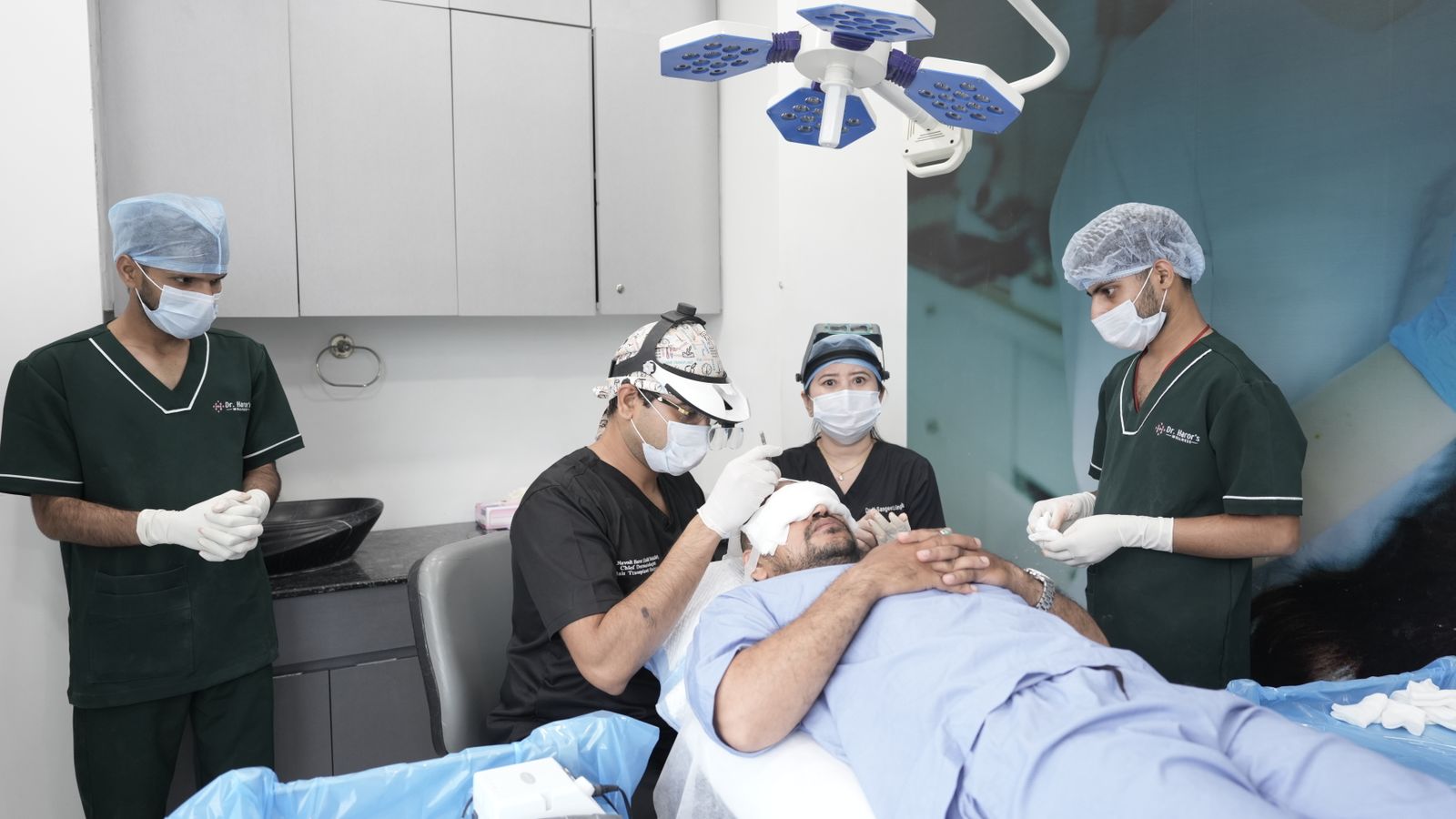
- Day 2 – the procedure: performed under local anaesthesia and usually lasting several hours.
- Day 3 – check-up and first wash: the team shows you how to care for your scalp over the following days.
Most patients then fly home. Having a contact person you can reach in the weeks afterwards matters.
Healing: what happens after the procedure
The first days usually bring mild swelling and small crusts in the recipient area, which tend to fall off within ten to fourteen days.
Many people are surprised that the transplanted hairs often fall out in the first weeks. This “shock loss” is a known part of healing: the follicles stay in the skin and start growing again after a resting phase. First growth often shows after three to four months; the final result can usually be judged after around twelve months, sometimes later.
Like any surgery, a hair transplant carries risks, such as infection, numbness, scarring or a result that does not meet expectations. Ask for these to be explained in your consultation.
How to choose a clinic
Rather than relying on social media photos alone, these questions help:
- Who performs which steps of the procedure, and what are the team’s qualifications?
- Does the procedure take place in a licensed hospital or clinic?
- Will you receive a written treatment plan in advance?
- How is aftercare organised once you are home?
- Will you have one fixed contact person throughout?
You can read more about each step on our hair transplant page.
Frequently asked questions about a hair transplant in Turkey
How many grafts will I need? That can only be answered properly after an examination. The number depends on the area, the density you want and how many grafts the donor area can give without visibly thinning. Photos give a first idea but do not replace an in-person examination.
Does it hurt? The procedure is done under local anaesthesia. The numbing injections at the start are usually described as uncomfortable; in the days afterwards simple painkillers are generally enough. Everyone experiences pain differently, though.
When can I go back to work? Many people with office jobs return after a few days if crusts and redness do not bother them. Avoid sport, saunas, swimming and direct sun for several weeks. The treating team will give you exact timings in writing.
Will I need medication for hair loss afterwards? A transplant does not stop natural hair loss in other areas. Whether supporting treatment makes sense is best discussed with a doctor – including your dermatologist at home.
Summary
A hair transplant in Turkey can be an option when the medical conditions are right and you decide with full information. Take your time with the consultation, ask every question and plan for the healing months. If you like, our team will answer your questions personally – use the form below this article or our enquiry page.